
Quick answer: Clear aligners are removable, nearly invisible trays that suit many mild to moderate alignment problems but must be worn for most of the day. Fixed braces are bonded to the teeth, work continuously and can handle a wider range of complex tooth movements. The right choice depends on your bite, the movements needed and your lifestyle, which is why an orthodontic assessment comes first.
Both options apply gentle, controlled forces to move teeth into better positions. Neither is “better” in every case. Understanding how each one fits into daily life helps you have a more useful conversation with your orthodontist.
Key takeaways
- Aligners are discreet and removable; braces are fixed and always working.
- Aligner results depend heavily on wearing the trays for the prescribed hours each day.
- Complex bite problems are sometimes better managed with fixed braces.
- Both require retainers after treatment to keep teeth in their new positions.
How do clear aligners and braces work?
Clear aligners are a series of custom-made transparent trays. Each set is designed to move the teeth a small, planned amount, and you progress to the next set on a schedule set by your orthodontist. Small tooth-coloured attachments are often bonded to some teeth to help the trays grip.
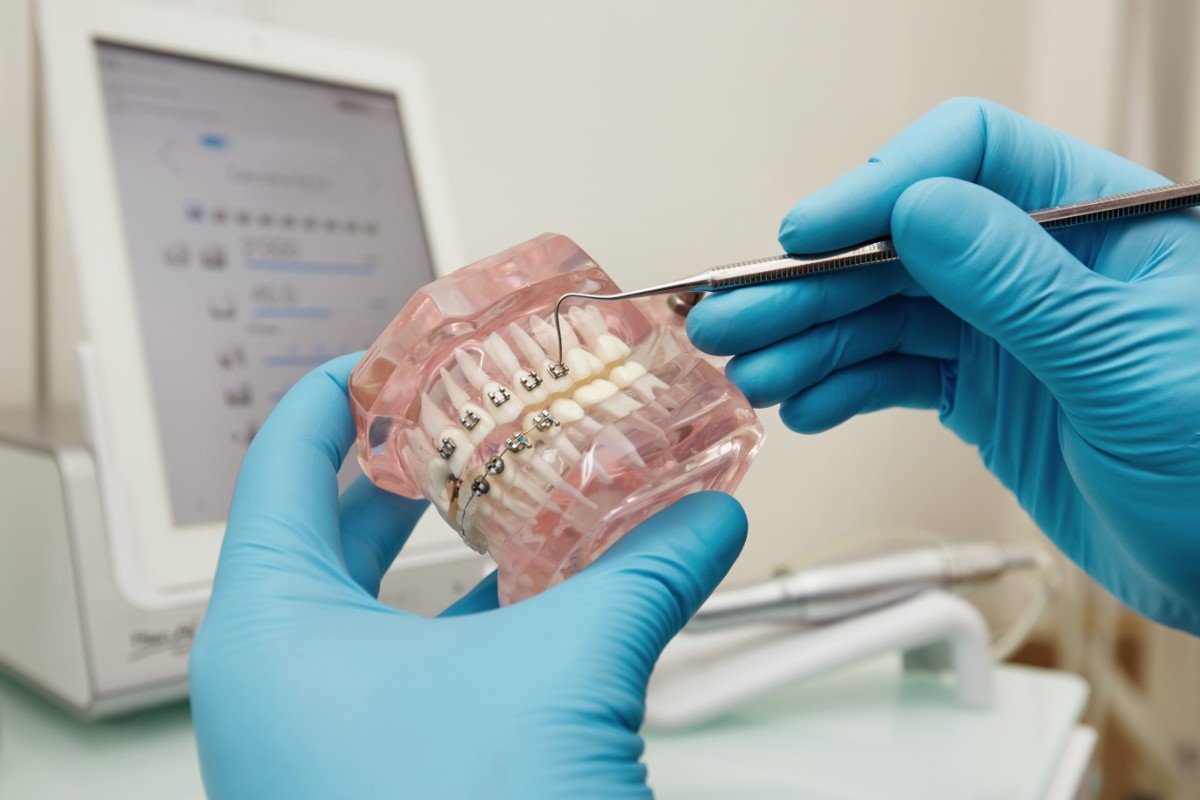
Braces use brackets bonded to the teeth and a wire that is adjusted at regular visits. Because they cannot be removed, they apply force around the clock.
Clear aligners vs braces: side-by-side comparison
| Factor | Clear aligners | Fixed braces |
|---|---|---|
| Appearance | Nearly invisible | Visible brackets and wires |
| Removable | Yes, for eating and cleaning | No |
| Daily commitment | Must be worn most of the day as prescribed | Works without daily effort |
| Eating | No food restrictions while trays are out | Avoid hard and sticky foods |
| Cleaning | Brush and floss normally; clean trays daily | Extra care needed around brackets |
| Complex movements | Suitable for many cases, not all | Effective across a wide range of cases |
| Retainers afterwards | Yes | Yes |
Who is a good candidate for clear aligners?
Aligners may be considered for crowding, spacing, certain bite irregularities and relapse after earlier orthodontic treatment. They work best for people who are comfortable taking responsibility for wearing them consistently. Suitability is confirmed only after a clinical examination of the teeth, gums, bite and jaw relationship. You can read more on our clear aligners treatment page.
When might braces be the better option?
Fixed braces may be preferred when the case involves larger or more complex tooth movements, significant bite correction, or when a patient is unlikely to wear removable trays consistently. In some situations an orthodontist may combine approaches during treatment.
How long does treatment take?
Duration depends on how far the teeth need to move and how they respond, so it varies from person to person for both aligners and braces. Your orthodontist will give you an estimate after planning your case and will monitor progress at regular reviews.
What happens after treatment?
Teeth naturally tend to drift back after they have been moved. Wearing retainers as instructed is essential to protect your result, whichever system you used.
How do you decide?
The most reliable way to choose is an orthodontic assessment. At CADIL, orthodontic care is led by Dr. Prince K Chacko, MDS (Orthodontics), who will explain which options suit your bite and goals. Book a consultation to discuss your case.